
Southampton Resident Records Workflow
Start with the most stable fact in hand. A full address belongs first in the Town GIS or the tax-map route. A known owner, buyer, or seller name belongs in the Suffolk County Clerk index. A person whose voting status needs confirmation belongs in the state voter lookup, where the person supplies the required identity details. A family-history question belongs with the library, museum, town books, or the local registrar. Each Southampton residents directory route answers a narrower question than the phrase "find a resident" suggests.
Keep the record type and date beside every result. An assessment roll identifies the printed owner or last reputed owner for its roll year. A deed index identifies parties to a recorded document. A directory or newspaper describes a historical snapshot. None of those items, standing alone, proves present occupancy or a personal relationship to an address. Southampton includes hamlets and incorporated villages, so first confirm which public body held the record for the address and event.
- Confirm the physical address and postal ZIP with the appropriate public map or postal lookup.
- Use the parcel or tax-map identifier to find the assessment-roll entry and label its roll year.
- Search the Suffolk Clerk index by tax map or party name for the recorded-document trail.
- Use the state voter tool only for its stated registration and polling functions, not as a complete list.
- For older households, ask Rogers Memorial Library or the Southampton History Museum which collection fits the year.
Southampton Resident Records Offices
Southampton records are deliberately distributed. The Town Clerk is the municipal custodian and FOIL administrator. The Assessor maintains the assessment roll and the E-911 street-address database. The Tax Receiver holds the tax roll and warrant. Suffolk County holds the recorded-instrument index and the official tax-map authority through the Real Property Tax Service Agency. The Board of Elections and New York State Unified Court System operate separate search and request channels. That split is useful because it keeps a parcel question, a recorded deed, and a court case in their proper context.
Southampton Assessor
Town Hall, 116 Hampton Road
Southampton, NY 11968
631-283-6020
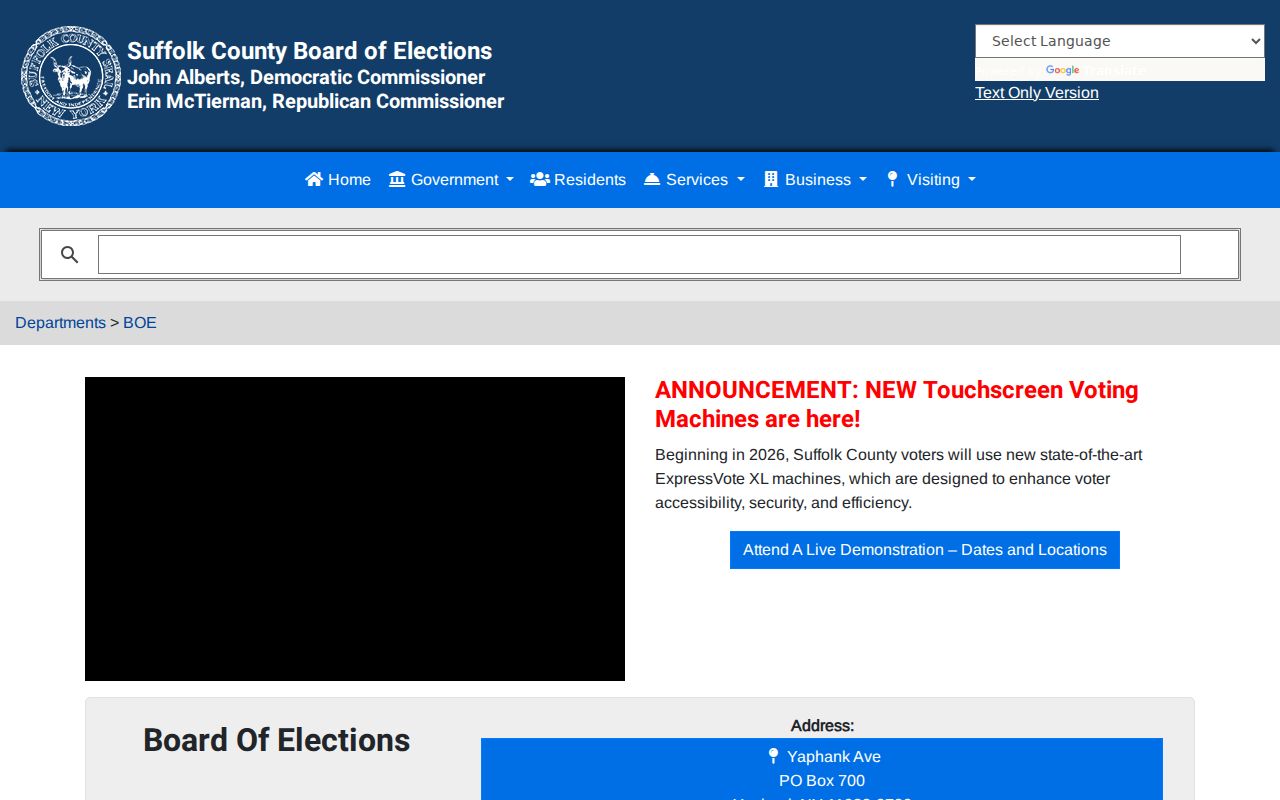
Suffolk Board of Elections
Registration and polling records
County and state access routes
See the official lookup
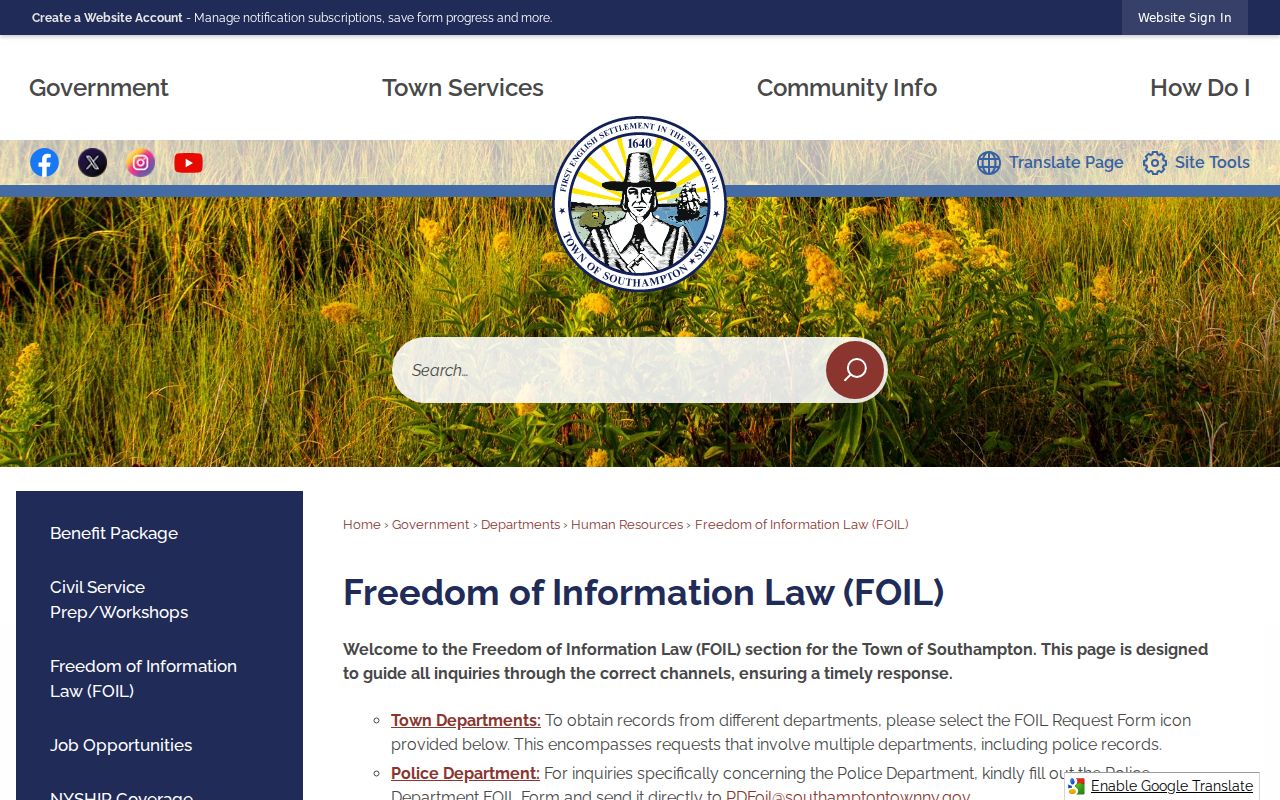
For municipal files that are not in a public portal, the Town's FOIL route asks for the full physical address and tax-map number when the request concerns a parcel.
The Southampton Town Clerk is the first municipal routing point for Town records.
Southampton Parcel Record Clues
The Town Assessor says it maintains a roll for more than 51,000 parcels, including the seven incorporated villages. The roll can carry the owner or last reputed owner name, a mailing address, a situs address, values, exemptions, class, acreage, and district codes. Those fields are helpful for reading a public Southampton property record, but they do not turn the roll into a title opinion or a household list. A mailing address can differ from the physical situs, and the printed owner field must be read with its roll year.
The Assessor's Office also maintains the street-address database used for E-911 and land-management work. Its final-roll archive supplies the current Town roll PDFs. For a detailed address sequence, use the Southampton street directory route after the parcel is identified.
| Portal field | Why it helps | Access note |
|---|---|---|
| Address or map click | Locates a Town GIS parcel | Free Public Information Center |
| Owner name or company name | Searches an eTax account | Current retention period not stated |
| Tax map number | Connects the parcel to County map work | Use exact DSBL when known |
| Item number | Identifies a Town eTax record | Search-type selector available |
Note: The free GIS map has layers with different dates, so the map's own source and date should stay with any research note.
The Assessor page explains the roll and parcel role.
Southampton Parcel Terms
Property records use short labels that can hide important differences. Reading those labels carefully prevents a search from making a broader claim than the source supports.
- Parcel
- A mapped unit of property used for assessment and tax administration.
- DSBL
- District, section, block, and lot, the Suffolk tax-map identifier structure.
- Situs
- The physical location printed for a parcel, which may differ from the correspondence address.
- Liber and page
- The document reference used by the County Clerk for recorded instruments.
The Suffolk Tax Map Division is the official tax-map authority. Subdivision, assemblage, or apportionment can create a new number, so preserve both the searched identifier and the map date.
Current Southampton Resident Directories
There is no one complete public Southampton residents directory. Instead, each official source identifies a different recorded connection to the Town. The assessment roll is parcel focused. The voter lookup provides narrow registration functions. The County Clerk index records parties to instruments. Community and historical organizations describe their own collections or geography, not a townwide roster. Choose the source by the question, then state the source date and limit with the result.
| Record source | Recorded connection | Custodian | Access limit |
|---|---|---|---|
| Final assessment roll | Parcel, owner/name as printed, mailing and situs fields | Southampton Assessor | Roll year controls the snapshot |
| eTax | Tax account by address, owner, company, map, or item | Town Tax Receiver | Historic retention not stated |
| Recorded documents | Grantor, grantee, document date and liber/page | Suffolk County Clerk | Online land records stated 1987-present |
| Voter lookup | Registration and polling functions for the searcher | New York elections system | Not a downloadable voter file |
| Local-history collections | Historical names, places, maps and publications | Library and archives | Collection coverage varies |
A search result is best treated as a lead to the custodian's record. The separate resident lookup route focuses on matching one person's name to the correct type of dated record.
Southampton Voter Record Limits
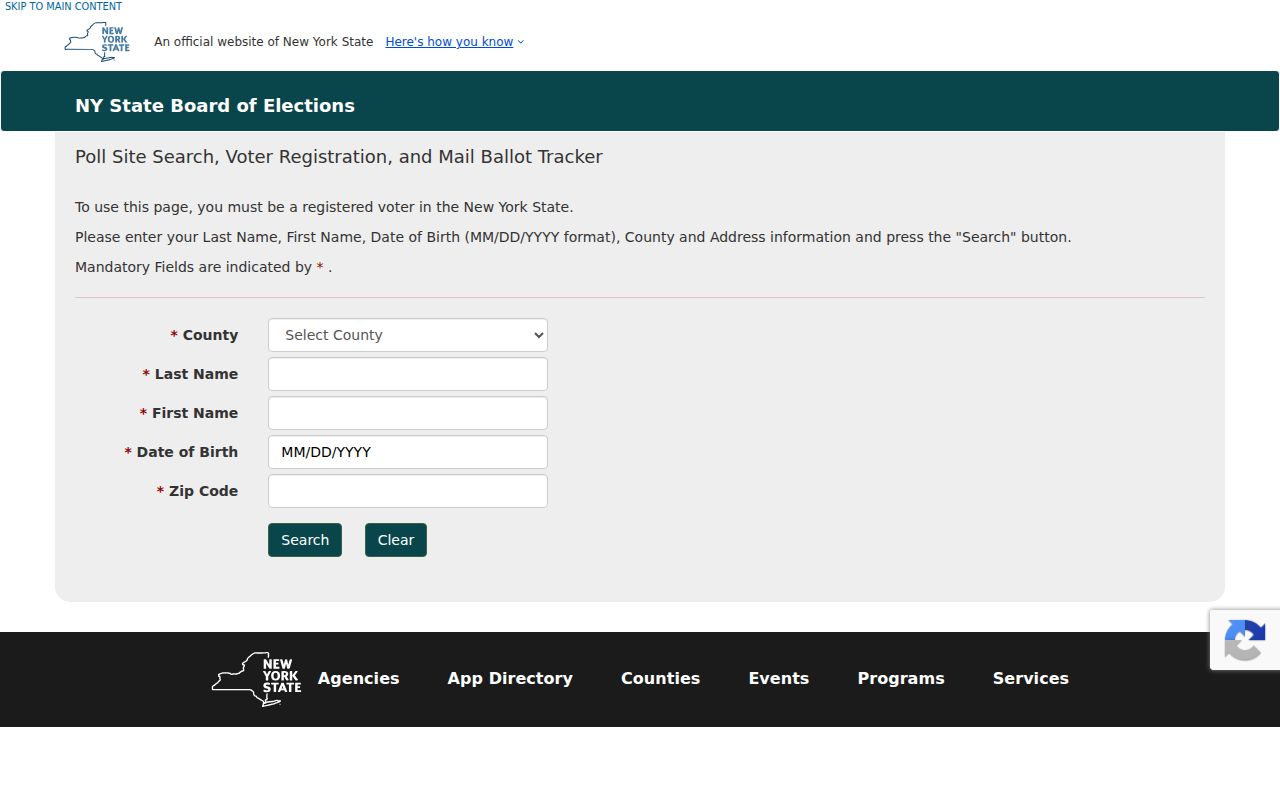
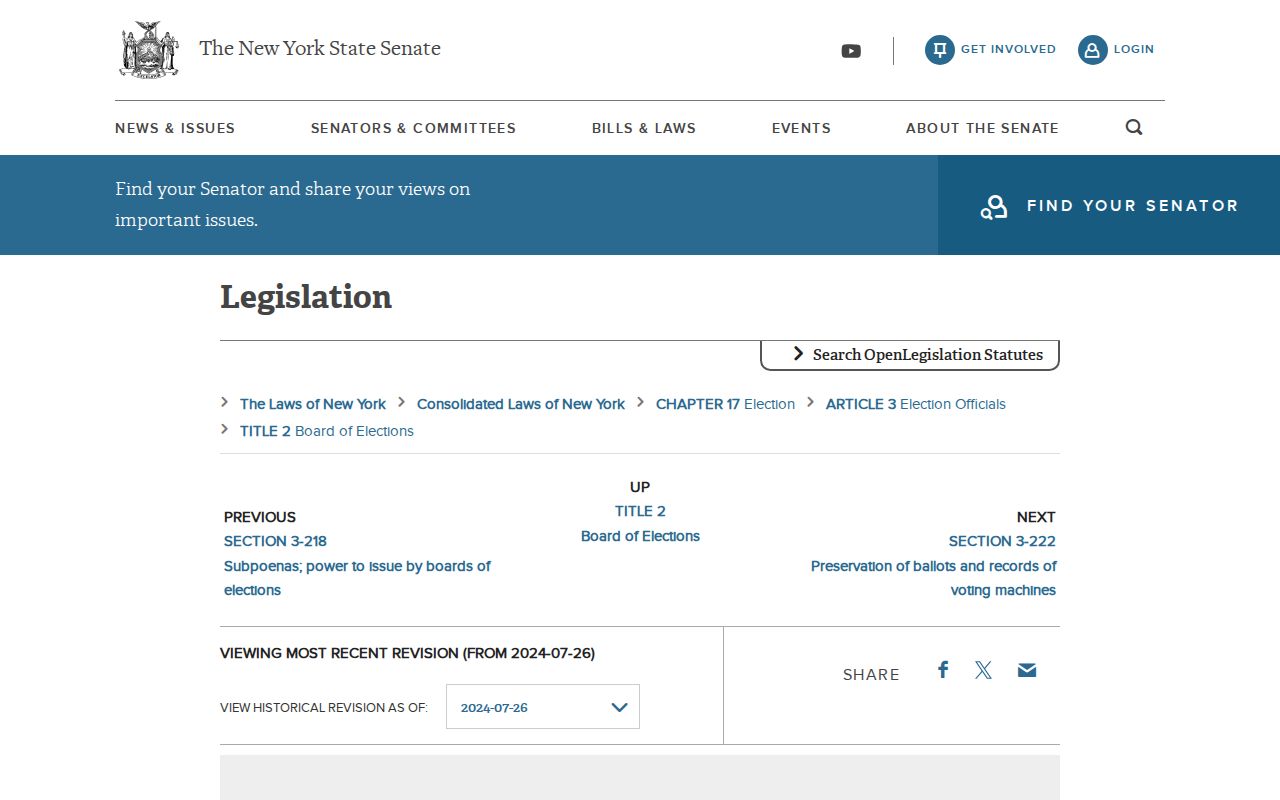
The official New York voter lookup accepts county, last name, first name, date of birth, and ZIP. It is for a registered New York voter and returns lookup, polling, and mail-ballot functions. It is not a full voter-file download. New York Election Law section 3-220 makes registration records public under Board of Elections supervision while withholding driver-license and non-driver-ID information, Social Security numbers, and facsimile numbers.
A broader voter-file request has a separate rule. The state Board's FOIL guidance says a written request for voter-registration information must state an elections purpose under Election Law section 3-103(5). A failed ordinary lookup can reflect a spelling issue, missing required data, inactive status, a protected record, or another access limit. It does not establish that a person has never registered in Southampton.
The official voter lookup displays the search path rather than a general resident roster.
Suffolk Deed Records for Southampton
The Suffolk County Clerk's public kiosk is the recorded-document route. Its Tax Map search accepts house number, street name, and ZIP. Name Records accepts a last name or corporation, with optional first name, suffix, date range, and Starts With, Contains, or Exact choice. The online land-record coverage stated by the Clerk is 1987 to the present. Search grantor and grantee spellings separately, then preserve the document date and identifier before treating an index entry as a lead.
Liber/Page search uses a deed or mortgage liber plus a page number. A result can include document type, grantor, grantee, date received, notations, and image or certified-copy controls. The kiosk marked judgments and lis pendens under construction during the research inspection, so an unavailable tab is not negative evidence. Earlier instruments and map work may need an office, archive, or RPTSA route.
The County Clerk program page describes its record services.
Southampton FOIL Record Requests
When a Town record is not online, write a focused FOIL request instead of assuming no record exists. The Town asks parcel requesters for the full physical address and tax-map number. Add the calendar year for assessment or tax material. For a site plan, subdivision, zoning decision, minutes, resolution, violation, or permit, include the project, board, decision number when known, and a date range. One request can name more than one Town department if the same parcel is involved.
The Town permits an email-scan request, physical copies subject to charges, or inspection with a personal phone or tablet for photographs. New York Public Officers Law Article 6, usually called FOIL, generally requires an agency to grant, deny, or acknowledge a request within five business days. An acknowledgment normally gives an approximate date, and appeals have their own 30-day and 10-business-day windows. Agencies may redact protected fields and need not create a new record or analysis.
The Town FOIL page identifies the local request route.
Historical Southampton Resident Directories
Older Southampton research has a deep record shelf, but not a confirmed uninterrupted city-directory run. An official historic report cites telephone directories from 1959 through 1985, federal census schedules from 1850 through 1950, the 1915 New York census, and Sanborn maps for 1916, 1926, 1932, 1945, and 1964. The report does not prove that every item is online or located at one desk. It is safer to ask the collection holder for the exact volume, publisher, and access method.
Rogers Memorial Library's Long Island Room holds town records, Southampton family genealogy, Shinnecock history, periodicals, maps, photographs, scrapbooks, and vertical files. Its collection is non-circulating. The Southampton History Museum Archives is another appointment-based source for genealogy, maps, photographs, manuscripts, and a library. The historical city-directory route is explained in more depth in the Southampton Directory Book.
The Suffolk County Board of Elections is one modern source that must be kept separate from historical collections.
Southampton Historic Record Volumes
The Town's eight published historic-record volumes are one of Southampton's most distinctive research paths. They cover material from 1639 through 1927 and were published from 1874 through 1930. Their subjects include early deeds, patents, boundaries, births, marriages, deaths, elections, highways, schools, town meetings, tax and land material, and later legal and railroad matters. They are historical documents, not a modern address list, but they can place a family, road, transaction, or public event in the proper period.
Volume 3 includes the first Town census in 1776. Later volumes use the Red Book, Yellow Book, Liber references, loose documents, and road material. The Patchogue-Medford catalog also identifies indexed Southampton Trustees and Clerk books. Cite the volume, year, page, and the kind of record found. That detail lets a later researcher tell an original entry from an abstract, compilation, or newspaper report.
New York Election Law section 3-220 supplies the public-record limit shown in this reference.
Southampton Postal and Village Lines
Southampton is a Town, not only the Southampton hamlet or Village of Southampton. It has incorporated villages and many hamlets, and a postal place name does not settle the municipal boundary. The 1964 Suffolk planning catalog lists historic Town-serving post-office labels from Bridgehampton through Westhampton Beach. The current assessment roll also shows a Southampton 11969 mailing example, which is a mailing clue rather than a confirmed geographic service area.
Use USPS to verify a particular current address. Then use Town GIS community and parcel layers to identify the record geography. ZIP is postal geography, while a tax map, assessment roll, recorder index, court record, or local registrar each uses a different boundary and date. This simple separation prevents a Southampton residents directory search from assigning the wrong Town or village custodian.
Southampton Record Privacy Boundaries
Public access has real limits. New York's Address Confidentiality Program can supply an official substitute mailing address for eligible participants. Do not try to reconstruct an actual protected location by joining public records. Motor-vehicle personal information is restricted by the federal Driver's Privacy Protection Act. Court, vital, and voter materials can be sealed, redacted, or governed by special eligibility rules. A blank result may instead reflect a different custodian, date range, spelling, village boundary, or incomplete portal coverage.
New York Penal Law sections 120.45 and 240.26 set anti-stalking and harassment boundaries. Preserve only the fields needed for the question, keep the agency and source date, and ask the custodian about correction or restricted access when a record is sensitive.
Southampton Digitized Land Files
Southampton's 2024 Town narrative reports continued Land Management digitization into GIS/Govern, barcode processing, and electronic retention. This is useful progress, but it does not mean all old permits, plans, or paper files are online. The Town GIS Public Information Center remains free for address or map-click research, search-radius changes, and parcel or overlay layers. The paid ePortal describes property, tax, sale, document, permit, and owner/address functions, with coverage varying by linked dataset.
For a permit, certificate, site plan, subdivision, variance, violation, or board record, combine the parcel identifier with a focused FOIL request. Keep the date of the map, roll, and document distinct. That approach leaves a clear path even when a portal changes or an older file is still on paper.