
Southampton Previous Residents by Era
A backward address search uses sources from different periods and with different levels of proof. Recorded deeds document an instrument, while assessment material identifies what a roll printed for a given year. Maps and historical collections can help connect an older address form to the same place. Household sources may provide clues about who lived there, but they are snapshots, not a complete list of occupants. Start with the most recent well-identified parcel, then move into the source appropriate to the earlier period.
| Source | Years it covers | Where held | What it shows |
|---|---|---|---|
| Suffolk County Clerk land records | 1987 to present online | County Clerk kiosk and copy route | Recorded deed or mortgage index entries, parties, date, type, and liber/page. |
| Town historic-record volumes | 1639 to 1927 material, published 1874 to 1930 | Town historic-record page and local repositories | Early deeds, boundaries, roads, tax and land material, and other Town records. |
| Southampton telephone directories | 1959 to 1985 cited | Repository and exact run not confirmed | Potential address or household lead if the holding is confirmed. |
| Federal and New York census | Federal 1850 to 1950; New York 1915 noted | Archive, library, and census routes | Historical household snapshots, subject to the source's date and access rules. |
| Sanborn and historic maps | Sanborn years 1916, 1926, 1932, 1945, and 1964 | Map collections and local research route | Address, road, and building-context comparison. |
| Town land-management records | Coverage not stated | ePermit, ePortal, or focused FOIL | Permit, plan, certificate, subdivision, or decision trail for a parcel. |
For recent Southampton previous residents research, begin with a parcel and recorded instrument. For older periods, use maps and institutions to test address continuity before linking a household reference to the parcel.
Southampton Address and Tax Map
Begin with the physical situs and the tax-map identifier, not a guessed past name. The Town GIS Public Information Center accepts an address or map click and can display parcels, footprints, districts, historic resources, flood zones, and community layers. The Town assessment-roll archive distinguishes the owner/name of last reputed owner, mailing address, and situs. Those separate labels matter when an old document uses one address while tax correspondence used another.
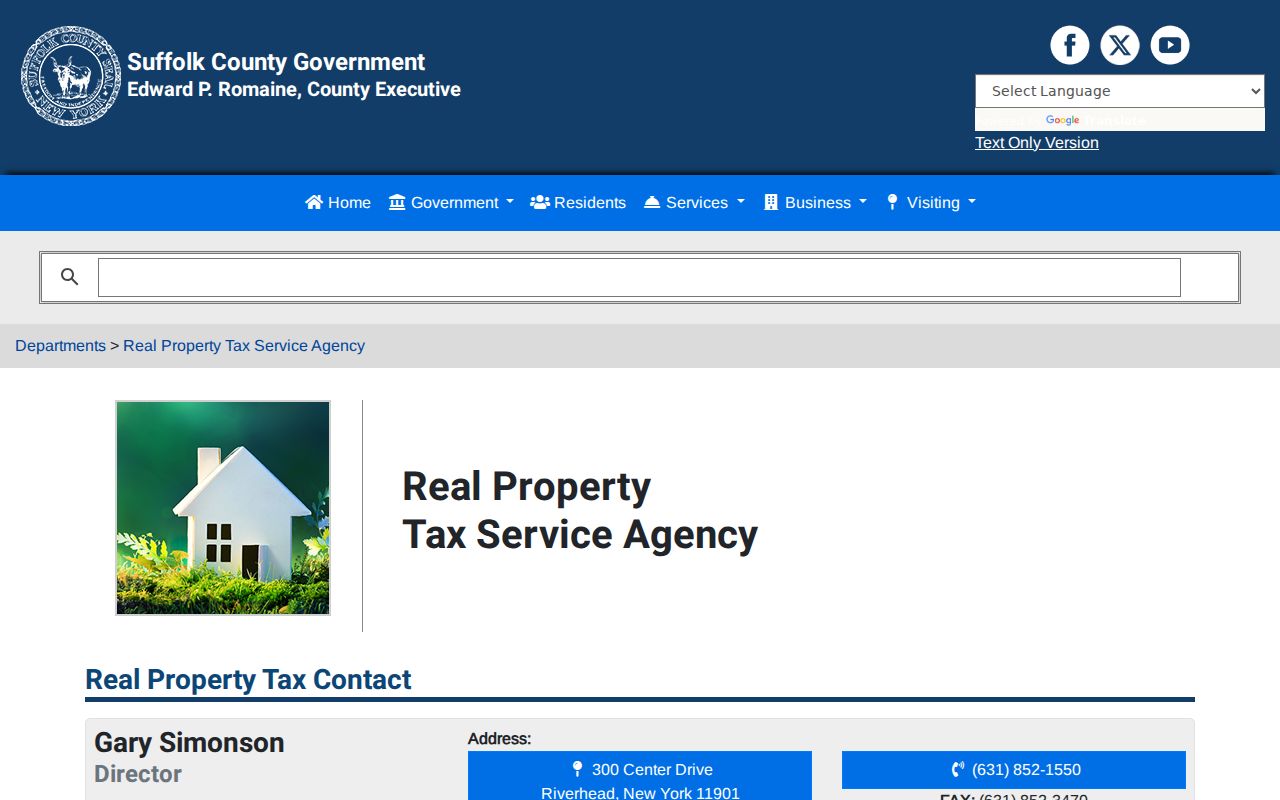
The Suffolk County RPTSA maintains the owner index and official tax-map information. Its DSBL format, district-section-block-lot, gives a durable property reference even when an address is written differently. An owner index is a research tool. A recorded instrument and, when needed, a certified copy are the document path for a transfer.
Keep the parcel number, assessment-roll year, source URL, and retrieval date with each result. A change in a lot, subdivision, or tax-map number can break an otherwise plausible address trail.
Southampton Deeds Since 1987
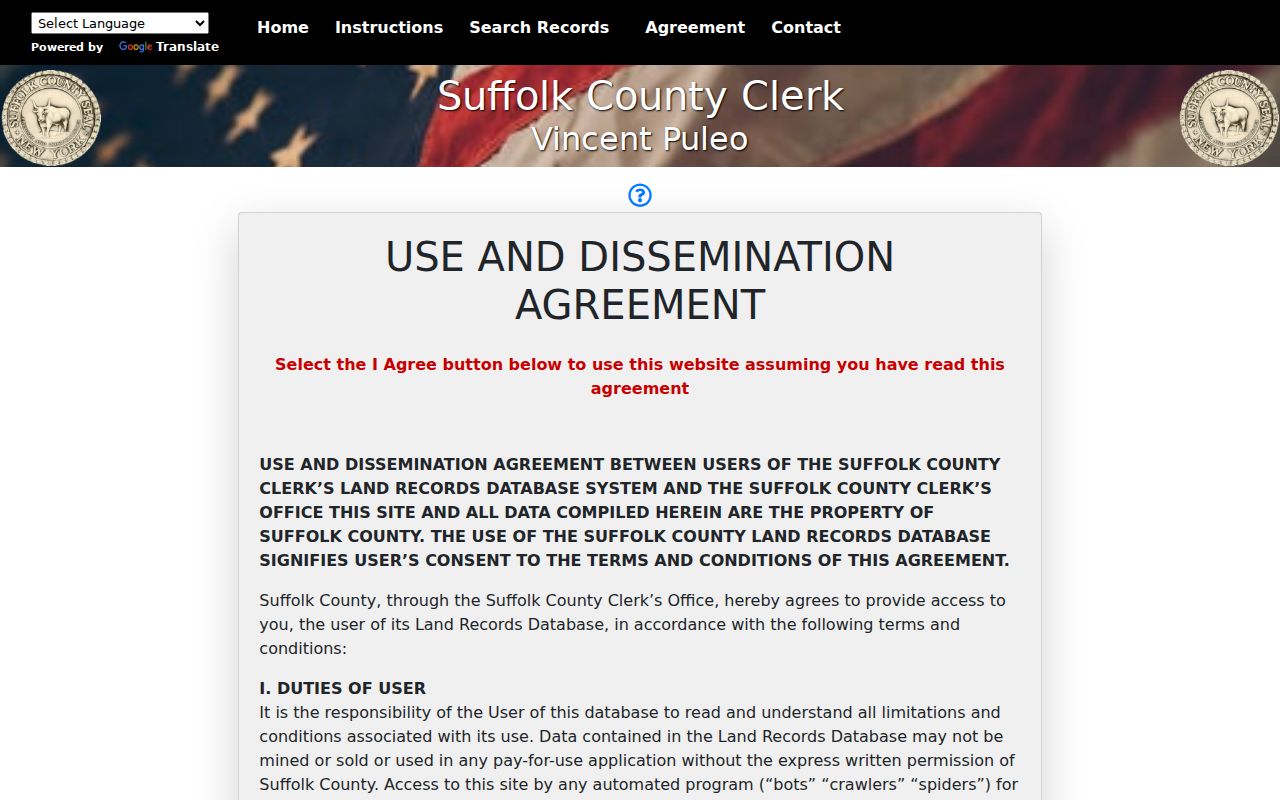
The Suffolk County Clerk states that online land records cover 1987 to present. Use the kiosk's Tax Map search with house number, street name, and ZIP to connect an address with a map result. Then use Name Records for a last name or corporation, optional first name or suffix, date range, and match mode. Search both grantor and grantee roles. The index can show deed or mortgage fields such as parties, document type, recording date, liber/page, and notations.
The Suffolk County Clerk public kiosk provides the Tax Map, Name Records, Liber/Page, Index, and related search interfaces.
Use a narrow name, date, or parcel search if many results appear. Several kiosk tabs show only the first 2,000 records, and the research inspection found the judgments and lis pendens functions marked under construction.
Trace Southampton Deeds Backward
A deed chain starts with today's best parcel identifier, then follows each recorded transfer to an earlier one. It is a document-by-document process, not a claim that an owner index alone proves title. Compare names, legal descriptions, tax-map references, document dates, and liber/page at each turn. Stop when the online coverage reaches its limit or when an index gap appears, then ask the appropriate office, library, or archive about older books or microfilm.
- Locate the physical situs, DSBL, and assessment-roll year through Town GIS, RPTSA, and the relevant assessment material.
- Use the Clerk Tax Map result and Name Records to find the most recent deed entry for the current grantee or owner name.
- Read the instrument entry and, where available, the document image or certified copy. Record its grantor, grantee, recording date, liber/page, and legal description.
- Search that deed's grantor as a prior grantee, then compare the next instrument's legal description and parcel references before continuing.
- Move to older books, microfilm, map abstracts, or archive assistance when the 1987 online boundary or a record gap is reached. Keep negative searches in the research log.
- Grantor
- The party transferring an interest in a recorded instrument.
- Grantee
- The party receiving the interest named in that instrument.
- Chain of title
- The sequence of recorded transfers researched for one parcel. An index hit alone does not establish a complete chain.
- Legal description
- The deed or survey description of land, often more stable than a street address when roads or lots have changed.
Suffolk Liber Pages and Copies
Liber/Page is a document locator used in the Clerk's land-record workflow. The kiosk's Liber/Page control takes a liber formatted as D00000000 or M00000000 and a page number. Record those values exactly from the result. They help retrieve the same deed or mortgage record and prevent a searcher from relying on a similarly named party.
| Record detail | What to retain |
|---|---|
| Index field | Grantor and grantee names, document type, recording date, and notation fields provide the first check on an instrument. |
| Liber/Page | Links the result to the Clerk's document-control route for a deed or mortgage. |
| Certified-copy request | The checkout workflow asks for liber/page, email, card, billing ZIP, and quantity; some documents may not be available. |
| Older record fallback | Ask the County Clerk, library, or archive about books, microfilm, map, and legal-description research beyond online coverage. |
The Suffolk County Clerk contact route is the right starting point for current questions about copies and access.
A certified copy is a custodian-issued document path. It should be requested when the purpose requires official document proof, rather than treating a search-result screen as final.
Southampton Address Continuity Maps
Historic research often stalls because the same place is described with an older road name, a post-office name, or a newer standardized address. The Southampton research did not locate a universal Town-wide renumbering date, so do not assume that a changed street label means a different parcel. Compare the tax map, legal description, and map year. Historic Hampton Bays maps noted in the research span 1838, 1842, 1858, 1896, 1902, and 1916. Sanborn years identified were 1916, 1926, 1932, 1945, and 1964.
Names such as South Country or Montauk, Ponquogue, Springville, Squiretown, Red Creek, Wakeman, and Bay Avenue West or Newtown are search variants from the historic profile. Treat them as map and source comparisons, not proof of a formal address conversion.
Southampton Historic Household Sources
Recorded ownership is only one part of a house history. Rogers Memorial Library's Long Island Room holds local records, genealogies, Shinnecock history, vertical files, maps, photographs, periodicals, and reports. The Southampton History Museum Archives offers appointment-based work with genealogies, maps, manuscripts, and other archival material. The Town historic-record volumes cover material from 1639 through 1927 and include early deeds, boundaries, roads, tax and land material, and Town records.
The research confirms a citation to Southampton telephone directories from 1959 through 1985, but not the exact publisher, continuous shelf run, or any reverse-directory capability. Confirm the item and year with the repository before treating it as evidence for who lived here before. The Southampton Directory Book page describes the collection route without assuming a complete local directory run.
Pair Southampton Directories and Census
Historical directories and census schedules can add household context after the deed trail identifies an address period. They should not be used to fill a gap by assumption. Federal census coverage noted in the Southampton research runs from 1850 through 1950, and a New York census for 1915 was also identified. A directory entry is a publication snapshot; a census is an enumeration snapshot. Each should be cited with its own date, page or image, and repository.
- Write down the address spelling, place label, parcel reference, and time range from the deed or map evidence.
- Ask Rogers, the museum, or another confirmed repository whether a relevant telephone or directory volume is held and whether it can be searched by address.
- Compare the printed address and name variants with the nearest available federal or New York census year, checking initials, spouse references, and post-office labels.
- Test the household lead against newspaper, obituary, probate, or map evidence, then record contradictions and gaps rather than forcing a match.
Note: A historic household source can support family-history research, but it does not establish every occupant or a person's present location.
Southampton Recording Alert Checks
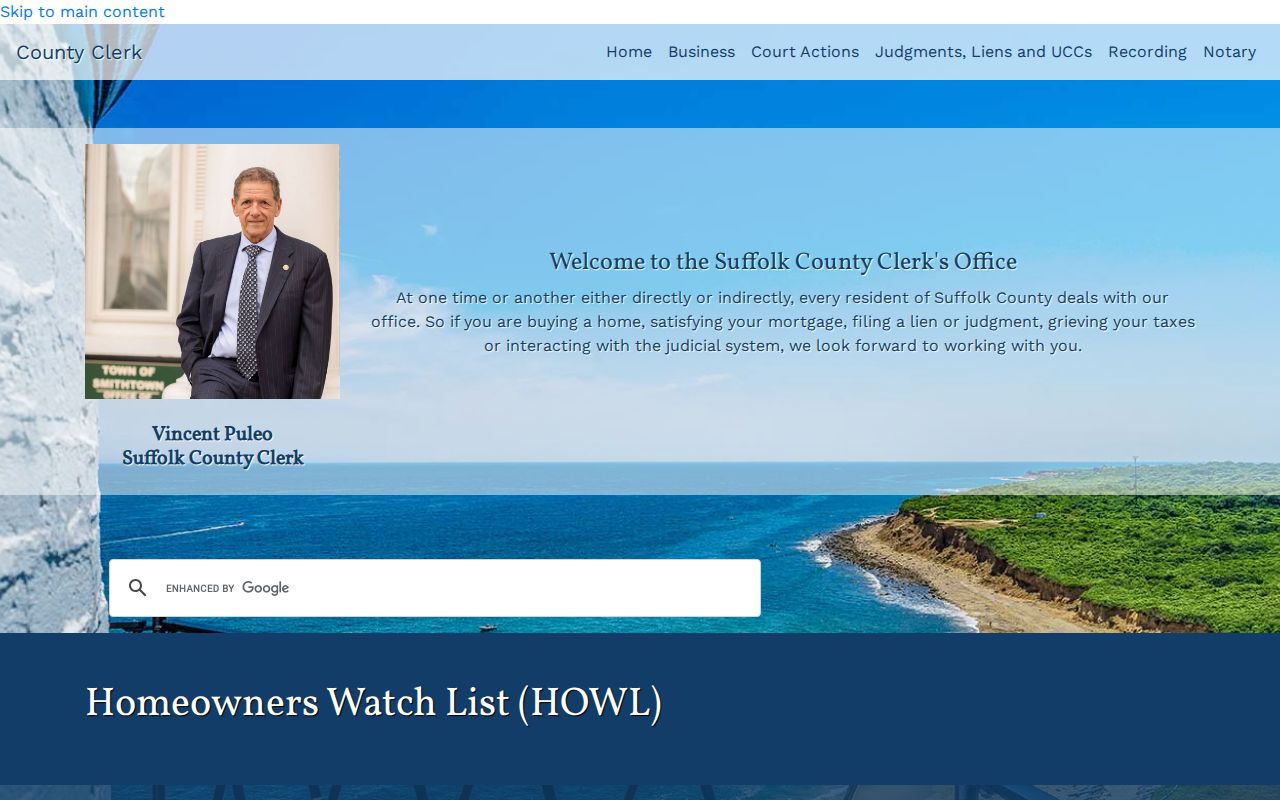
The County Clerk's Homeowners Watch List, known as HOWL, is an address-specific recording alert rather than a past-resident list. A participant selects a property from a map, confirms the current owner and tax map, submits a name and email, and waits for registration. The County says registration can take up to 48 hours. It also warns that a recent purchase can take 8 to 10 weeks to appear and does not promise complete or timely notice.
The Suffolk Homeowners Watch List explains the official recording-alert route.
This service can prompt a review of a new recording. It does not replace a careful Clerk search or confirm that a document is valid.
Southampton Previous Residents Limits
Use this research for house history, family history, property-document questions, civic transparency, or scam verification. Do not turn a record trail into a profile of a living person. New York protects confidential addresses in the Address Confidentiality Program and restricts motor-vehicle personal information. A public record is not permission to reconstruct a protected address, contact someone, or combine sensitive data from different sources.
Lawful use. Preserve the custodian, record date, retrieval date, and exact field label for each Southampton result. Do not use address research to stalk, harass, follow, or confront any person.
The New York Attorney General deed-theft guidance directs owners to check County Clerk records and use official reporting channels when a recording concern arises.
For a suspicious solicitation, independently type the official agency domain, compare the stated record and fee with the custodian's page, and contact the Clerk or Attorney General through published contact information.