
Southampton City Directory Collections and Gaps
Southampton has strong historical collections, but the research did not confirm a local city-directory publisher, a continuous run, or reverse-directory holdings. The materials below are the documented starting points for a city directory search. They include town record volumes, cataloged clerk and trustee books, a telephone-directory citation, maps, and historical household sources. A researcher should ask the holding institution for the title, publisher, year, shelf location, and access condition before treating a book as a Southampton directory.
| Collection | Years | Where Held | Access |
|---|---|---|---|
| Town historic-record volumes | 1639–1927 records; published 1874–1930 | Town Historic Records page; local-history catalog references | Book, PDF, or catalog research with volume and index citation |
| Trustees and Clerk books | Trustees 1741–1826; later books 1871–1892 and 1893–1927 | Patchogue-Medford genealogy catalog and local-history holdings | Catalog or index research; confirm scan or appointment |
| Southampton telephone directories | 1959–1985 cited | Repository not confirmed | Ask Rogers Memorial Library or the museum about title, shelf years, and access |
| Sanborn map series | 1916, 1926, 1932, 1945, 1964 | National map collections and report bibliography | Map comparison; local shelf has not been confirmed |
The telephone citation does not prove that a city directory is held locally, and it does not establish a reverse or criss-cross section. The same caution applies to an online catalog hit. Treat each item as a source lead until the library, museum, or county historical society confirms the physical or digital item. That distinction preserves the difference between a documented shelf, a bibliography, and an unverified directory run.
The Town Historic Records Books collection documents the published volumes that form the deepest local starting point.
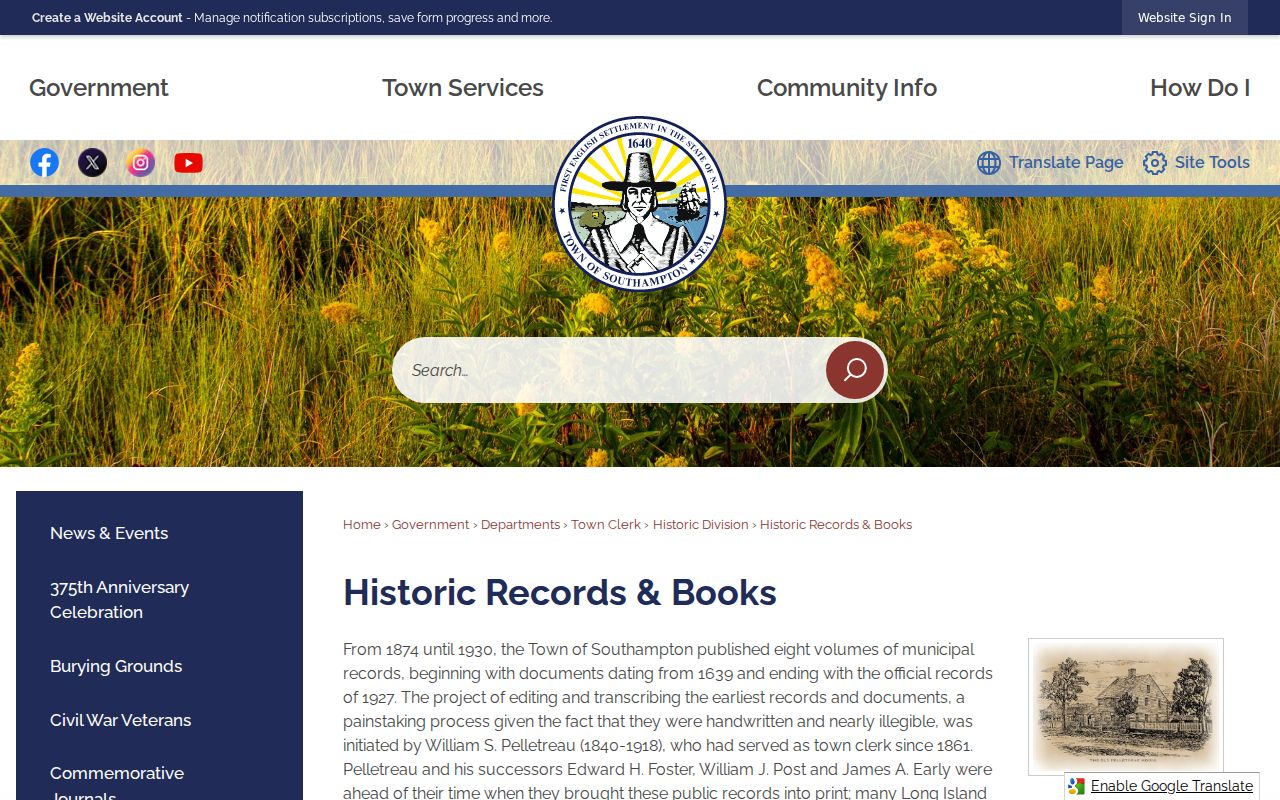
These books support place, family, road, and land research, but they are not a confirmed Southampton city-directory series.
Southampton Town Books Before Directories
For periods before any confirmed city directory, the Town’s eight printed volumes offer a different kind of household context. They cover early deeds, patents, elections, births, marriages, deaths, highways, schools, tax and land material, town meetings, budgets, and later legal and railroad matters. The books were published between 1874 and 1930 for records reaching from 1639 through 1927. They are historical record compilations, not a modern list of people by address.
Patchogue-Medford Library’s genealogy catalog identifies indexed Southampton titles under call number 974.725 T-SHTM. Its entries include Trustees Records for 1741–1826, Clerk minutes, the seventh volume for 1871–1892, and the two-part eighth volume for 1893–1927. Use the catalog citation to request a volume, then retain the volume, part, page, and the record type when saving a note.
- 1639–1927: the Town volume series covers the underlying local records.
- 1874–1930: the eight volumes were published in stages.
- 1741–1826: indexed Trustees material appears in the Patchogue-Medford catalog.
- 1959–1985: an official historic report cites Southampton telephone directories.
Note: No definitive first or last Southampton city-directory year was found, so the timeline does not fill that gap with a guessed publisher or date.
Southampton City Directory Research Desks
Rogers Memorial Library’s Long Island Room is the first local stop for a Southampton city directory question. Its non-circulating collection includes town records, Southampton family genealogy, Shinnecock history, periodicals, local records, vertical files, photographs, maps, scrapbooks, postcards, and government and organization reports. A reference librarian can help distinguish a catalog reference from an item that can be requested or copied. The room also has handling rules, so plan to work from notes, permitted copies, and full citations.
The library’s history page identifies the Long Island Room, catalog, and digitized collections rather than a confirmed directory run. That is useful evidence of where to ask, not proof that a city directory is searchable at home. Bring the known surname, alternate spellings, an address or road label, and the rough years. Those details help staff check an item list, microfilm, periodical holdings, or a related local-history file.
The Rogers Memorial Library history collection shows the local-history setting for Southampton directory research.
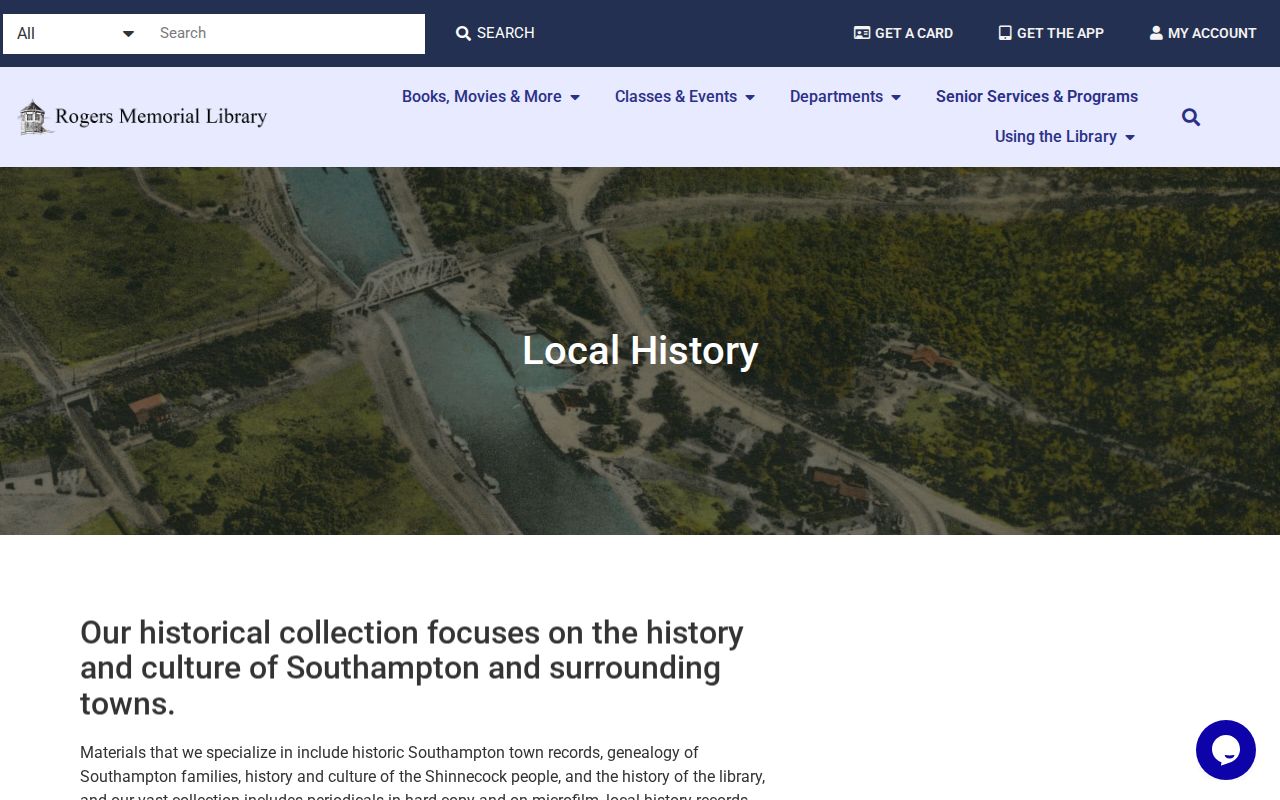
The image reinforces why a reference-room request is more reliable than assuming every historical listing has been digitized.
Southampton History Museum Archives is another access channel, available by appointment year-round. The museum reports 560 cubic feet of archives, more than 2,000 library volumes, genealogies of early English settlers, photographs, maps, and manuscripts. A countywide library and archive in Riverhead is another documented research route. Neither institution should be represented as holding an exact Southampton city-directory run unless staff confirm it.
The museum archives and research center is the documented appointment route for original local-history material.

An appointment can connect family notes, maps, manuscripts, and photographs without turning any one source into a complete resident list.
Southampton City Directory Telephone and Map Clues
An official Southampton historic report cites telephone directories for 1959–1985, federal census schedules for 1850–1950, the 1915 New York census, and Sanborn maps from 1916, 1926, 1932, 1945, and 1964. The citation is valuable because it names a set of nearby sources. It does not identify the telephone-book publisher, establish that every year survives, or say that a local reverse directory exists. Confirm each title and repository before relying on it.
Sanborn maps can help test whether a printed address or street name makes sense for its period. They show built features and map-year context, not a complete list of occupants. Historic road labels may differ from current standardized addresses, especially in the Hampton Bays material. Pair the map year with a directory or telephone year rather than silently converting an old label into a current address.
How to Read a Southampton City Directory Entry
No permission-safe sample entry from a confirmed local run was retained. The inventory below is therefore a general research method, not a claim that any Southampton volume uses the same abbreviations or format. Copy a listing exactly as printed, including initials, punctuation, spelling, page, title, year, publisher when known, and the abbreviation key from that same item. A printed entry is a historical publication snapshot. It is not proof of every occupant, current residence, or legal ownership.
| Name as printed | Record initials, spelling, suffixes, and any spouse or relative notation without normalizing them. |
|---|---|
| Address line | Preserve the house number, street label, post-office wording, and any apparent unit detail. |
| Occupation or affiliation | Capture it only when printed and relevant to family-history identification. |
| Marks or abbreviations | Note an owner, renter, widow, or other mark only if the confirmed volume’s key defines it. |
| Source citation | Keep the year, publisher if known, page, repository, image or copy reference, and adjacent-year comparison. |
- Criss-cross directory
- A street-order section that can connect an address to listings, if a confirmed volume includes one. Southampton holdings have not been confirmed.
- Householder index
- An index organized around the named household or address, rather than a complete statement about everyone at a location.
- Abbreviation key
- The volume’s own explanation of its shortened terms. Photograph or transcribe it with the entry because meanings vary by publisher.
Note: A different spelling, initial, or post-office label may describe the same research target, so retain variants rather than forcing a match.
Tracing Southampton City Directory Households
A Southampton city directory search works best as a chain of dated snapshots. Start with a known name, address, and year. Then look in adjacent years where a confirmed directory or telephone source exists, noting changes in initials, spouse references, occupation wording, road label, and post-office name. Pair the result with the federal and New York census years documented in the historic report. Use a deed, obituary, probate file, newspaper, or map only to test a question raised by the listing.
- Record the name, address, source title, year, page, and every abbreviation exactly as printed.
- Search the same surname and address in the nearest confirmed year, allowing for initials and spelling variants.
- Compare the address with the dated map or Sanborn sheet rather than assuming a road label stayed unchanged.
- Pair the time period with the 1915 New York census or the relevant federal census snapshot.
- Test a disappearance with a newspaper, obituary, probate, deed, or archive record and record the source limits.
A household can disappear because it moved, changed how a name was printed, was not listed, or because the next source has a gap. The evidence should state which explanation is supported and which remains open. When the research shifts to a present-day street or parcel, use the address-focused records on the Southampton Street Directory rather than treating an old listing as current proof.
Southampton Historic Volumes for Family History
The town record volumes offer an unusually deep family-history layer. They contain early births, marriages, deaths, deeds, roads, elections, town meetings, and land material, with records reaching back to the 1639 era. Rogers adds family genealogy and local history; the museum holds genealogies of early English settlers. These sources can supply names, relationships, place labels, and dates that help distinguish two similar directory entries.
Use their source type carefully. A town-volume abstract, a library vertical file, a newspaper report, and an original manuscript do not carry the same evidentiary weight. Keep the custodian, document date, publication or record type, page, and retrieval date alongside every note. This preserves the local context while leaving room for later confirmation from the responsible record keeper.
Southampton City Directory Newspaper Pairing
Newspapers are another companion to a city directory search. The Patchogue-Medford catalog points to Suffolk historic newspapers from 1821–2007, the Brooklyn Daily Eagle from 1841–1955, New York Times historical coverage from 1851 onward, and library access to Newsday. Rogers holds periodicals in hard copy and microfilm. Search a name with a road, hamlet, village, or post-office variant, then preserve whether the hit is a newspaper report, abstract, original record, or later compilation.
The New York genealogy records route can be relevant after a historical household trail identifies a qualifying event. State and local genealogy access has eligibility and time limits, so it is not a replacement for directory research. Use it to pursue a documented family question, not to infer a current location.
The New York State genealogy records information shows the official statewide route that may follow a carefully documented Southampton historical search.
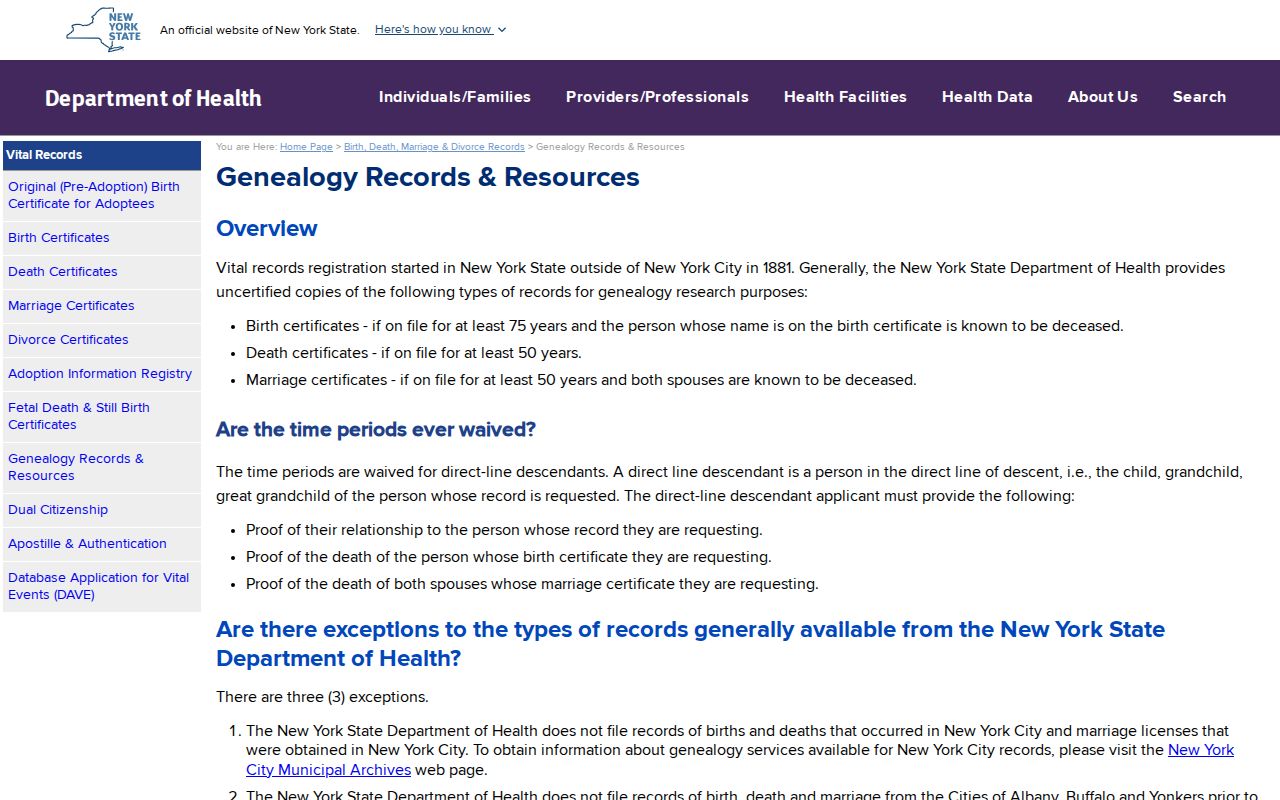
Eligibility rules and record custody still control whether a genealogy request can answer the question raised by a historical listing.
Southampton City Directory Requests and Limits
When a title is missing online, use the access chain that matches the material: Rogers reference staff and catalog, Southampton History Museum by appointment, the countywide library and archive in Riverhead, the Town historic-books page, and the Patchogue-Medford catalog. Ask whether a title is a city directory, telephone directory, reverse directory, microfilm run, newspaper index, map, or local-history reference. Then ask for its years, publisher, restrictions, and copying rules.
State-level routes add census, map, historic-newspaper, and record-group leads through New York archives and library resources. FamilySearch’s New York Land Records collection covers 1630–1975, though image and index availability varies by item. It is a historical fallback for a documented name or land question, not a source for current ownership or a substitute for a confirmed Southampton directory title.
The local research record has real gaps. Exact Southampton city-directory titles, publishers, uninterrupted years, reverse-directory holdings, and an obituary-index shelf were not located. The Town Clerk can be asked whether older municipal books or indexes remain in custody, but no current online index should be assumed to cover older material. Keeping that gap visible is more useful than attaching a generic directory label to an unconfirmed source.