
Southampton Resident Records Workflow
Begin with the fact that is hardest to mistake. A full address points to the Town GIS or the tax-map route. A name tied to a purchase or sale points to the Suffolk County Clerk index. Voting status belongs in the state voter lookup. The searcher must supply the required identity details there. Family history fits the library, the museum, town books, or the local registrar. Each Southampton residents directory path answers a narrower question than "find a resident" implies.
Keep the record type and its date next to every result. An assessment roll prints an owner or last reputed owner for that roll year. A deed index lists parties to a recorded document. A directory or newspaper captures one historical moment. None of these alone proves who occupies an address today. Southampton spans hamlets and incorporated villages. Confirm which public body held the record before trusting it.
- Confirm the physical address and postal ZIP with the appropriate public map or postal lookup.
- Use the parcel or tax-map identifier to find the assessment-roll entry and label its roll year.
- Search the Suffolk Clerk index by tax map or party name for the recorded-document trail.
- Use the state voter tool only for its stated registration and polling functions, not as a complete list.
- For older households, ask Rogers Memorial Library or the Southampton History Museum which collection fits the year.
Southampton Resident Records Offices
Southampton keeps its records on purpose in separate hands. The Town Clerk serves as municipal custodian and FOIL administrator. The Assessor keeps the assessment roll plus the E-911 street-address database. The Tax Receiver holds the tax roll and warrant. Suffolk County controls the recorded-instrument index. Its Real Property Tax Service Agency holds official tax-map authority. The Board of Elections and the New York State Unified Court System run their own channels. Each runs its own search and request process. The split keeps a parcel question, a deed, and a court case each in proper context. Each record stays in its proper context.
Southampton Assessor
Town Hall, 116 Hampton Road
Southampton, NY 11968
631-283-6020
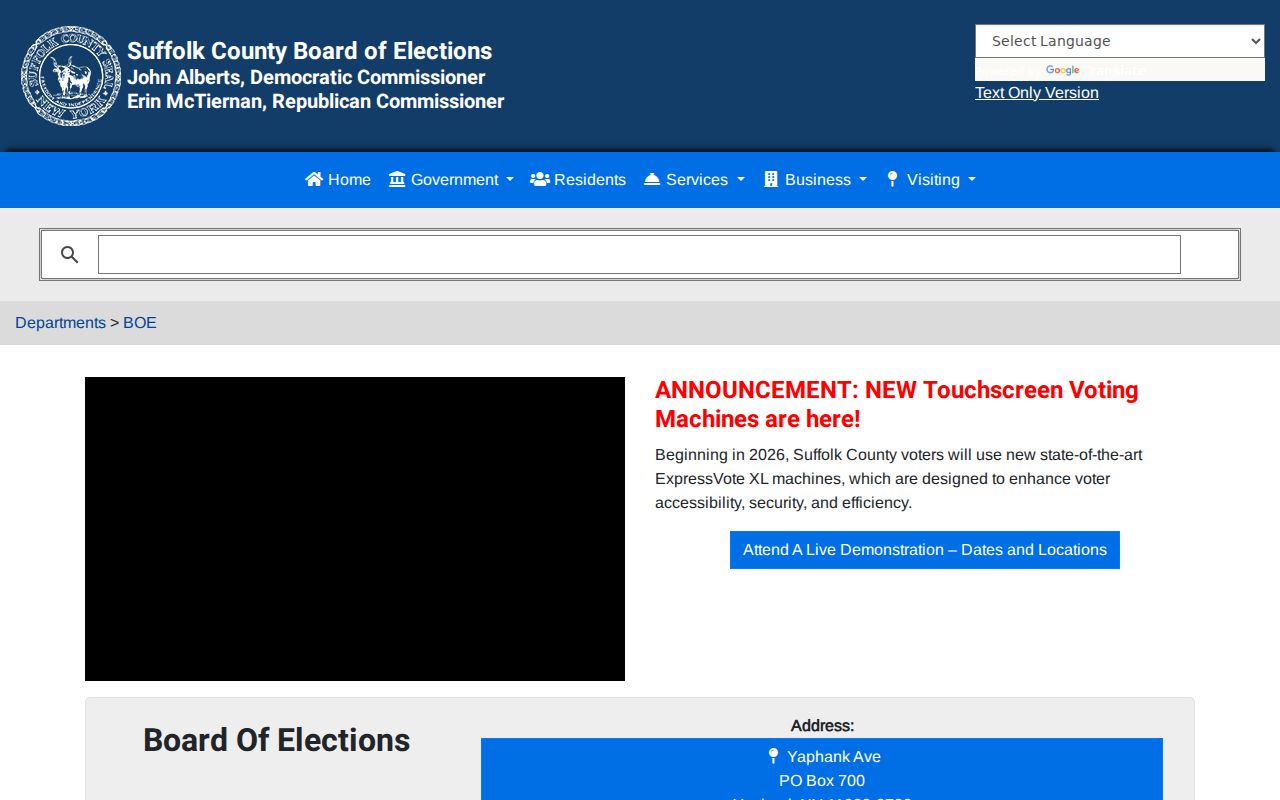
Suffolk Board of Elections
Registration and polling records
County and state access routes
See the official lookup
Municipal files that sit outside any public portal still have a door. The Town's FOIL route asks for the full physical address and tax-map number whenever the request concerns a parcel.
The Southampton Town Clerk is the first municipal routing point for Town records.
Southampton Parcel Record Clues
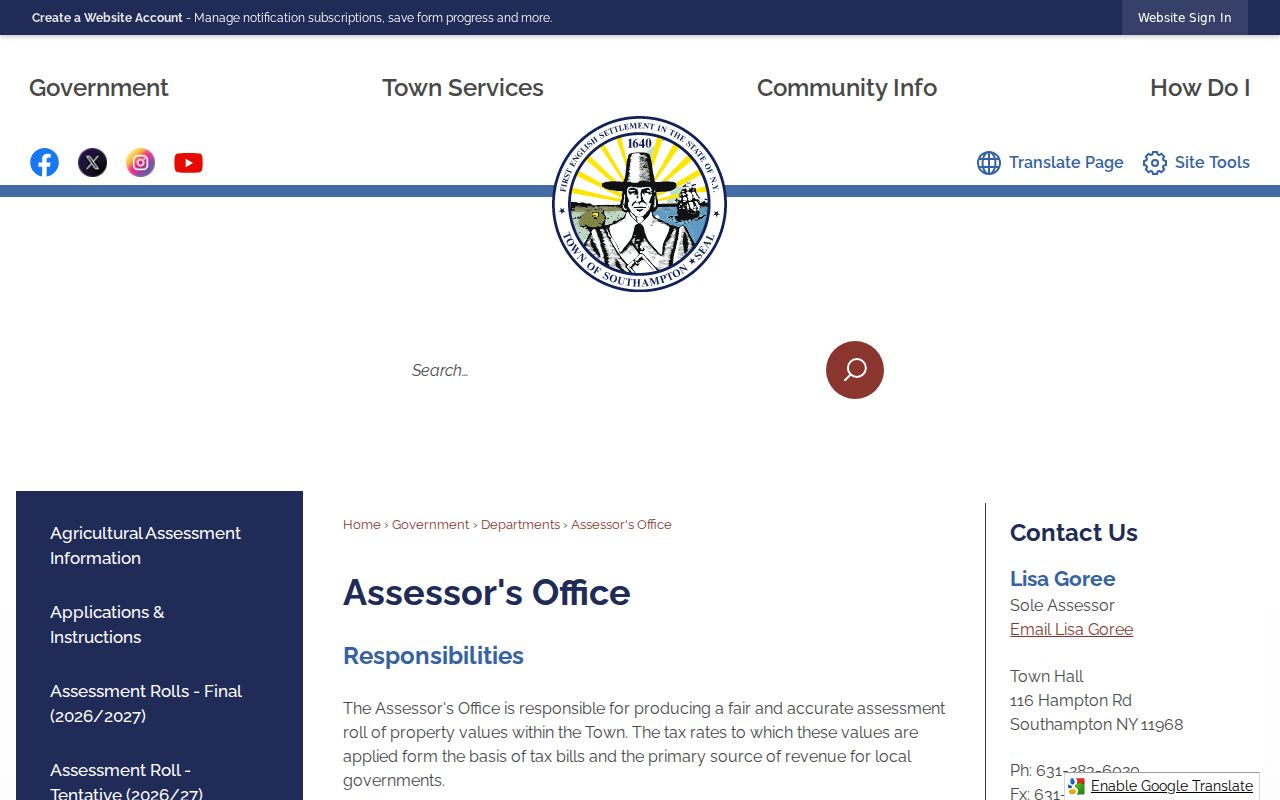
The Town Assessor maintains a roll covering more than 51,000 parcels. It includes all seven incorporated villages. Fields on the roll include owner or last reputed owner, mailing address, and situs address. Values, exemptions, class, acreage, and district codes also appear. Those details help anyone read a public Southampton property record. They do not make the roll a title opinion or a household list. A mailing address can differ from the physical situs. Read the printed owner field together with its roll year.
The Assessor's Office also maintains the street-address database behind E-911 and land-management work. Its final-roll archive supplies the current Town roll PDFs. Once a parcel is identified, the Southampton street directory route can fill in a detailed address sequence.
| Portal field | Why it helps | Access note |
|---|---|---|
| Address or map click | Locates a Town GIS parcel | Free Public Information Center |
| Owner name or company name | Searches an eTax account | Current retention period not stated |
| Tax map number | Connects the parcel to County map work | Use exact DSBL when known |
| Item number | Identifies a Town eTax record | Search-type selector available |
Note: The free GIS map layers carry different dates, so keep the map's own source and date with any research note.
The Assessor page explains the roll and parcel role.
Southampton Parcel Terms
Property records lean on short labels. Those labels can hide differences that matter, and reading them carefully keeps a search from claiming more than its source supports.
- Parcel
- A mapped unit of property used for assessment and tax administration.
- DSBL
- District, section, block, and lot, the Suffolk tax-map identifier structure.
- Situs
- The physical location printed for a parcel, which may differ from the correspondence address.
- Liber and page
- The document reference used by the County Clerk for recorded instruments.
The Suffolk Tax Map Division is the official tax-map authority. Subdivision, assemblage, or apportionment can create a new number. Keep both the searched identifier and the map date.
Current Southampton Resident Directories
No single public Southampton residents directory exists. Each official source records a different connection to the Town. The assessment roll is parcel focused. The voter lookup handles narrow registration functions. The County Clerk index lists parties to instruments. Community and historical organizations describe their own collections or geography rather than a townwide roster. Pick the source that fits the question, then state its date and its limit alongside the result.
| Record source | Recorded connection | Custodian | Access limit |
|---|---|---|---|
| Final assessment roll | Parcel, owner/name as printed, mailing and situs fields | Southampton Assessor | Roll year controls the snapshot |
| eTax | Tax account by address, owner, company, map, or item | Town Tax Receiver | Historic retention not stated |
| Recorded documents | Grantor, grantee, document date and liber/page | Suffolk County Clerk | Online land records stated 1987-present |
| Voter lookup | Registration and polling functions for the searcher | New York elections system | Not a downloadable voter file |
| Local-history collections | Historical names, places, maps and publications | Library and archives | Collection coverage varies |
Treat any search result as a lead toward the custodian's record. The separate resident lookup route focuses on matching one person's name to the right type of dated record.
Southampton Voter Record Limits
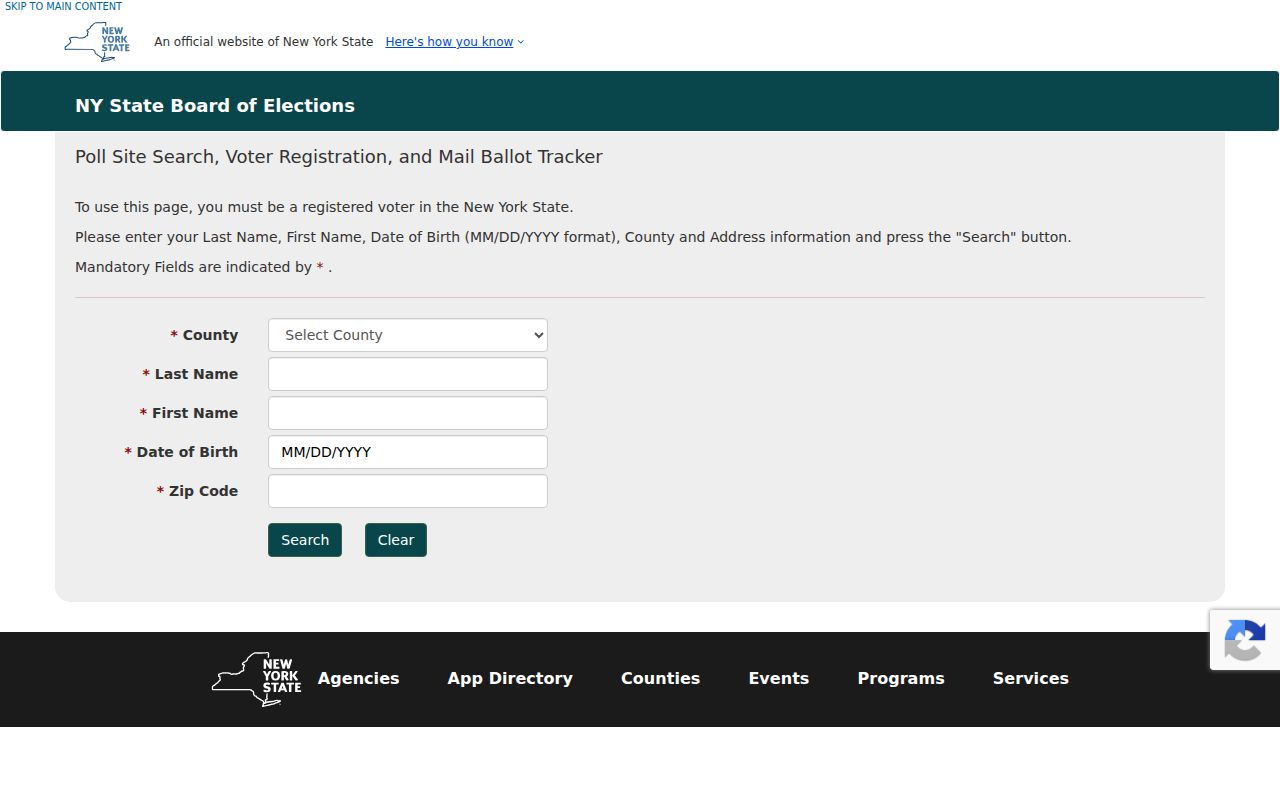
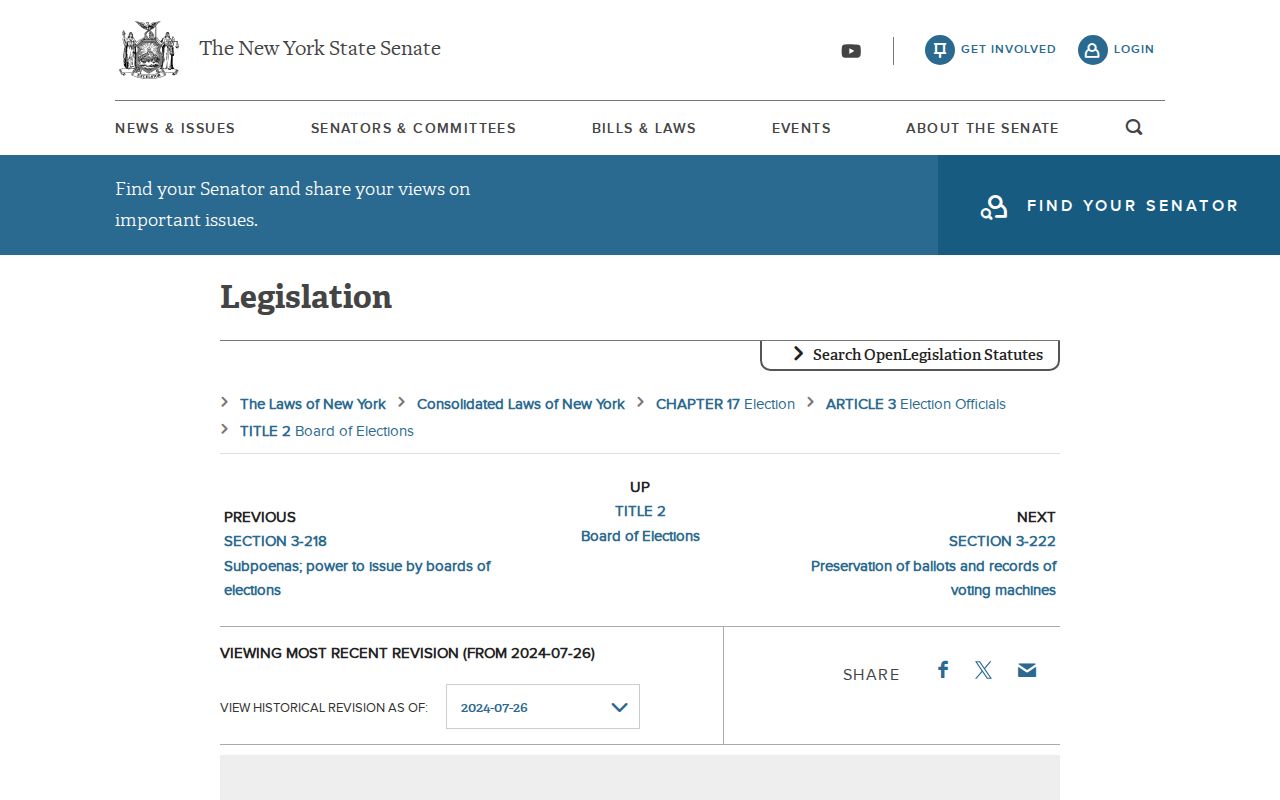
The official New York voter lookup accepts county, last name, first name, date of birth, and ZIP. It serves a registered New York voter. It returns lookup, polling, and mail-ballot functions. It is not a full voter-file download. Under Election Law section 3-220, registration records stay public with Board of Elections supervision. Driver-license and non-driver-ID information, Social Security numbers, and facsimile numbers stay withheld.
A broader voter-file request follows a different rule. The state Board's FOIL guidance requires a written request for voter-registration information. It must state an elections purpose under Election Law section 3-103(5). An ordinary lookup can fail for many reasons: spelling, missing required data, inactive status, a protected record, or another access limit. A failed lookup does not prove a person never registered in Southampton.
The official voter lookup displays the search path rather than a general resident roster.
Suffolk Deed Records for Southampton
Deeds in Southampton run through the Suffolk County Clerk's public kiosk. The Tax Map search takes a house number, street, and ZIP. Name Records works from a last name or corporation. An optional first name, suffix, and date range can narrow it. Matching options include Starts With, Contains, or Exact. Coverage on the Clerk's site reaches back to 1987. Search grantor and grantee spellings one at a time. Record the document date and identifier before acting on any index entry in a land-records or residents directory search.
A Liber/Page search needs a liber and page number from a deed or mortgage. Results can show the document type, grantor, grantee, date received, notations, and controls for an image or certified copy. The kiosk lists its judgments and lis pendens tabs as under construction. An unavailable tab proves nothing either way. Earlier instruments and map work may call for the office itself. An archive or the RPTSA route may also serve those needs.
The County Clerk program page describes its record services.
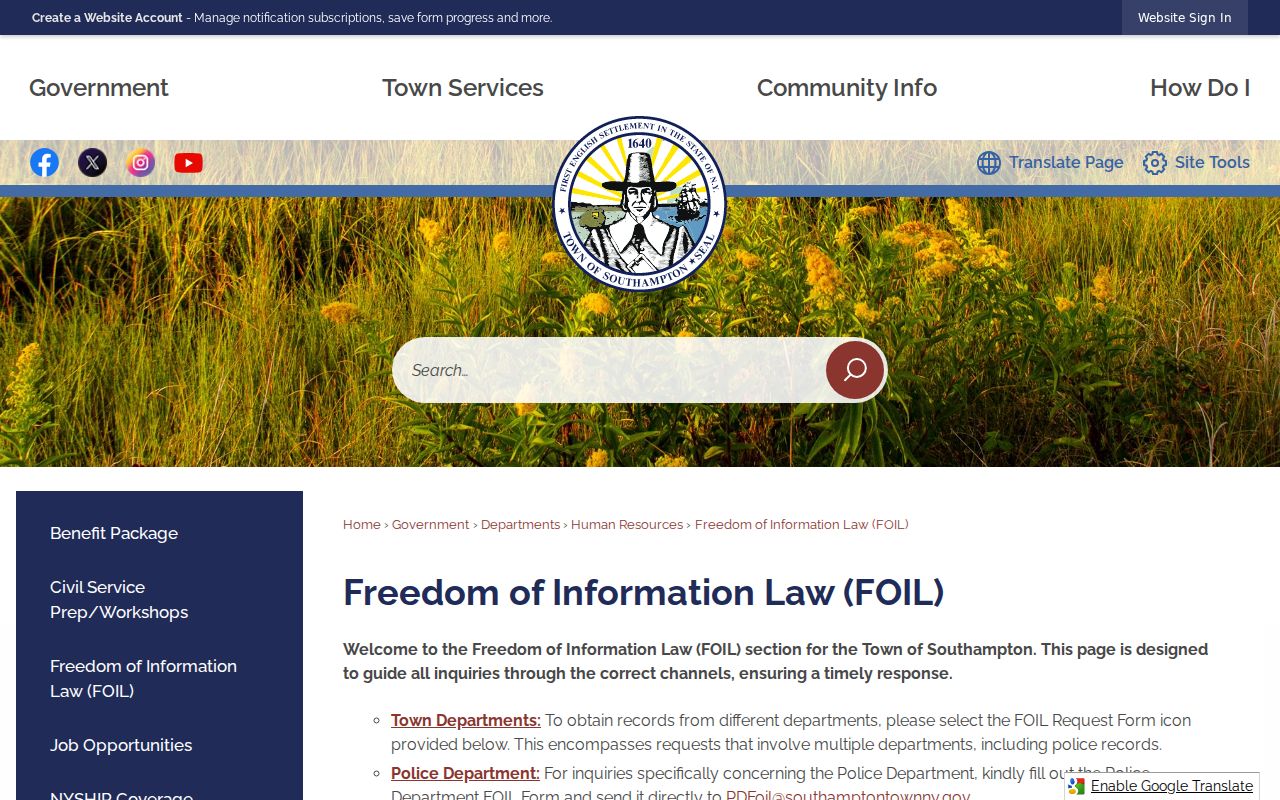
Southampton FOIL Record Requests
A Town record may not be online. File a focused FOIL request rather than assuming no record exists. The Town wants the full physical address and tax-map number for parcel material. Add the calendar year for assessment or tax items. Site plans, subdivisions, zoning decisions, minutes, resolutions, violations, and permits should each name the project, board, decision number when known, and a date range. One request can reach more than one Town department where the same parcel is involved.
Delivery options include an email scan. Physical copies come at a charge. You can also inspect records where you photograph pages with your own phone or tablet. FOIL, New York Public Officers Law Article 6, generally obliges an agency to grant, deny, or acknowledge within five business days. An acknowledgment usually carries an approximate completion date. Appeals run on their own 30-day and 10-business-day clocks. Agencies may redact protected fields. They need not create a new record or analysis for you.
The Town FOIL page identifies the local request route.
Historical Southampton Resident Directories
Southampton's older research shelf runs deep, though no uninterrupted city-directory run is confirmed. A historic report cites telephone directories spanning 1959 through 1985. Federal census schedules run from 1850 through 1950. The report also names the 1915 New York census and Sanborn maps for 1916, 1926, 1932, 1945, and 1964. That list does not promise every item sits online or at one desk. Ask the holder for the exact volume, publisher, and access method before planning a trip.
Rogers Memorial Library's Long Island Room keeps town records, Southampton family genealogy, Shinnecock history, periodicals, maps, photographs, and scrapbooks. It also holds vertical files. Nothing circulates. The Southampton History Museum Archives is a second appointment option. It covers genealogy, maps, photographs, and manuscripts. It also offers a library. The Southampton Directory Book unpacks the historical city-directory route in far more depth.
The Suffolk County Board of Elections is one modern source that must be kept separate from historical collections.
Southampton Historic Record Volumes
The Town's eight published historic-record volumes offer Southampton's most distinctive research path. The set covers 1639 through 1927 and was published between 1874 and 1930. Subjects range from early deeds, patents, and boundaries to births, marriages, deaths, and elections. Highways, schools, town meetings, and tax and land matters appear too. So does later legal and railroad business. These are historical documents, not a modern address list. Even so, they can anchor a family, road, transaction, or public event in its proper period. That strengthens any resident lookup.
Volume 3 holds the first Town census, taken in 1776. Later volumes draw on the Red Book, Yellow Book, and Liber references. Loose documents and road material feed them as well. The Patchogue-Medford catalog also indexes certain Southampton Trustees and Clerk books. Cite the volume, year, page, and record type. That habit lets a later researcher separate an original entry from an abstract, compilation, or newspaper report.
New York Election Law section 3-220 supplies the public-record limit shown in this reference.
Southampton Postal and Village Lines
Southampton is a Town, bigger than the hamlet or the Village of Southampton alone. It contains incorporated villages and many hamlets. A postal place name settles nothing about the municipal boundary. The 1964 Suffolk planning catalog lists historic Town-serving post-office labels from Bridgehampton through Westhampton Beach, and the current assessment roll shows a Southampton 11969 mailing example. Treat both as mailing clues. Neither confirms a geographic service area.
Verify a specific current address with USPS first. Then use Town GIS community and parcel layers to pin down the record geography. ZIP is postal geography. A tax map, assessment roll, recorder index, court record, and local registrar each follow different boundaries and dates. Keeping that separation straight stops a Southampton residents directory search from landing on the wrong Town or village custodian.
Southampton Record Privacy Boundaries
Public access has real limits. New York's Address Confidentiality Program gives eligible participants an official substitute mailing address. Never piece together a protected location by joining public records. The federal Driver's Privacy Protection Act restricts motor-vehicle personal information. Court, vital, and voter materials can be sealed, redacted, or tied to special eligibility rules. A blank result may simply point to a different custodian, date range, spelling, village boundary, or thin portal coverage. That does not mean the record is missing.
New York Penal Law sections 120.45 and 240.26 draw the anti-stalking and harassment lines. Keep only the fields a question needs, note the agency and source date, and ask the custodian about correction or restricted access when a record is sensitive.
Southampton Digitized Land Files
Southampton's 2024 Town narrative describes steady digitization of Land Management work. It is moving records into GIS/Govern with barcode processing and electronic retention. That is real progress. It does not put every old permit, plan, or paper file online, though. So temper expectations before you dig. The Town GIS Public Information Center is still free and open to anyone. It supports address lookups, map-click research, adjustable search radii, and parcel or overlay layers. A paid ePortal sits alongside it. Its described functions span property, tax, sale, document, permit, and owner or address queries. Coverage shifts by which dataset you link to.
For anything specific, pair the parcel identifier with a tightly framed FOIL request. That covers a permit, certificate, site plan, subdivision, variance, violation, or board record. Keep the map date, the roll date, and the document date separate in your notes. That habit keeps your path clear. It works even when a portal changes or an older file never left paper.